

Despite this expansion, Bucharest still lags behind other Central and Eastern European capitals in terms of flexible space as a share of total office stock. Warsaw leads with approximately 250,000 sqm and a 4% share, followed by Prague with 153,300 sqm (3.9%), Sofia with 92,000 sqm (3.9%) and Bratislava with 40,500 sqm (2.3%), while Bucharest's 73,500 sqm represents a 2.1% share.
"The growth of this segment reflects a broader shift in the way companies plan their workplace strategies. For occupiers, flexible workspace is no longer seen merely as a solution to temporary needs, but increasingly as a complementary piece of their overall office approach," said Mădălina Cojocaru, Partner, Office Agency at Cushman & Wakefield Echinox. "As the market matures, competition is increasingly shifting beyond price towards the quality of the workspace, services, accessibility and the overall user experience."
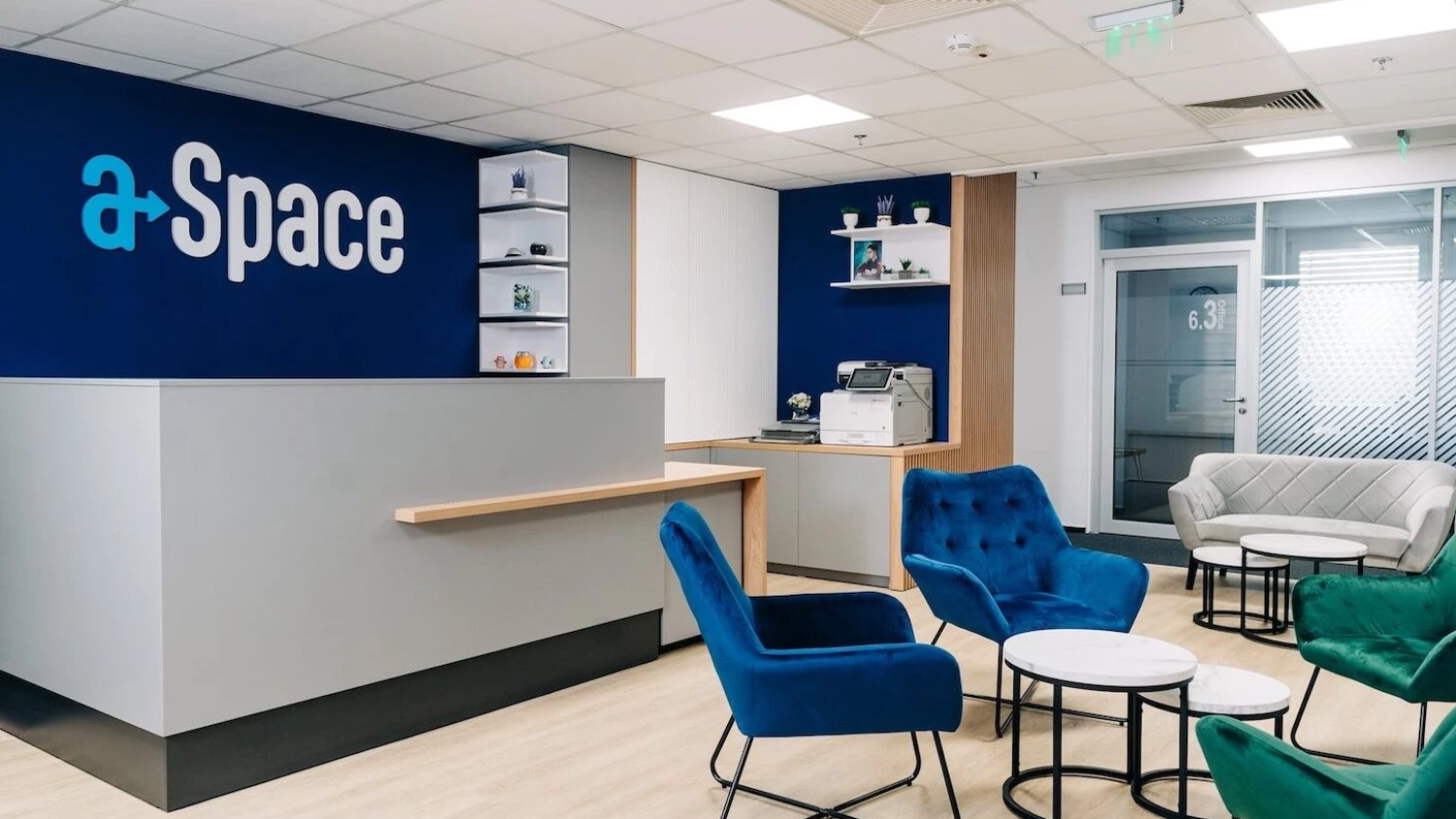
Flexible space is concentrated in the Centre-West submarket, which hosts eight centres totalling 16,000 sqm, or around 21.8% of the city's flexible stock. The Centre submarket records the highest penetration rate at 3.2%, with 12 centres and 14,500 sqm. The Floreasca-Barbu Văcărescu area follows with 10,400 sqm across seven locations, the CBD with 10,300 sqm across eight centres, and Dimitrie Pompeiu with 9,700 sqm. Supply remains limited in other parts of the capital, with the East submarket currently having no coworking presence at all. Of the 24 operators active in the city, 62% are local and 38% international, with IWG (through Regus and Spaces), aSpace, HOTSPOT and Mindspace together accounting for 63% of total flexible stock.
Rates in Bucharest range from approximately €150 to €450 per desk per month, varying by product and services included. Part-time memberships run from €100 to €250 per desk per month, hot desks from €150 to €250 per month, dedicated desks from €200 to €450 per month, and private offices from €300 to €500 per person per month, all excluding VAT. The report also notes growing integration of flexible concepts into building owners' leasing strategies, with some projects hosting both specialist operators and landlord-managed concepts, as well as a diversification of operating models ranging from conventional leases to turnover leases and managed space arrangements.